Key Insights from the French Market Analysis
Analysis of the French energy market is key to understanding the dynamics and trends affecting the sector both locally and internationally. In this detailed analysis, we address the important factors influencing energy prices, supply and demand, and the latest regulatory policies. This comprehensive overview will allow you to keep up to date with weekly changes and anticipate possible market variations, both in France and in other relevant markets such as Spain.
Table of Contents
October 2026
Energy demand and generation mix
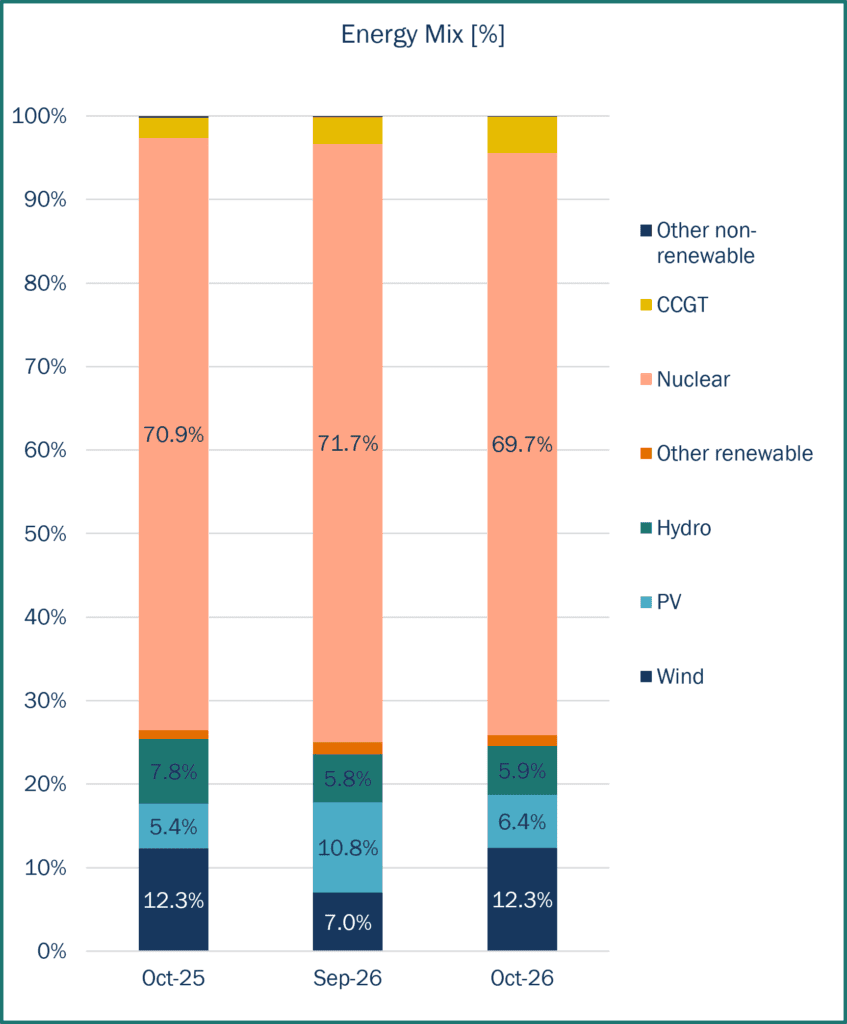
Source: Haya Energy Solutions
In October 2026, total generation in France reached 39,354.69 GWh.
Nuclear power remains the backbone of the French generation mix, playing a key role in ensuring system security of supply; it represented 69.7% of October’s energy mix. However, environmental restrictions and numerous outages meant that the underlying balance remained tighter than usual. The other main technologies have been wind and PV. CCGT generation increased from 3.2% in September to 4.3% in October.
Regarding renewable energy sources, we have entered into the period of the year with less PV generation. Wind was the largest renewable contributor, accounting for 12.3% of total generation. It was followed by PV generation (6.4%) and hydropower (5.9%). Hydroelectric stocks have decreased in the last months, reaching a critical point, from 1,840 GWh at the end of September until 1,600 GWh by end October (figures until week 43 in RTE), with very low levels in comparison with the last 5 years stock level in the same period.
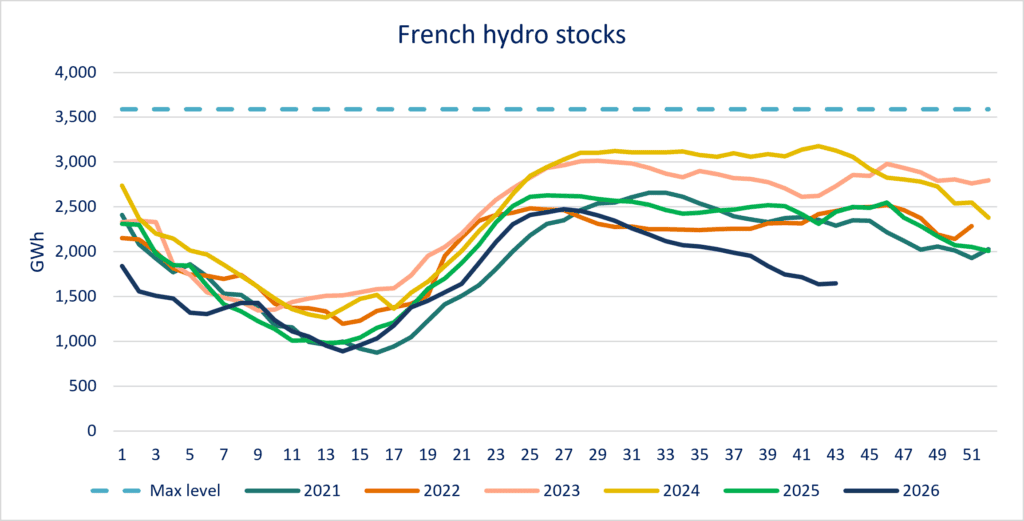
Note: Hydraulic stock represents the aggregated energy content of French lake-type hydro reservoirs, expressed as head energy (energy producible by the plant directly connected to the reservoir). Maximum stock: 3,591 GWh. Data published weekly by RTE.
Energy prices & market panorama
French power markets experienced significant upward pressure during the first half of October, primarily reflecting elevated gas prices, exceptionally weak wind generation and persistent constraints on French nuclear and hydroelectric availability. Exceptionally low river flows restricted hydroelectric output and delayed the restart of the Chooz nuclear plant, while temporary environmental constraints also affected generation at Saint-Alban. During the second half of October, the outlook became progressively more balanced. Improving wind conditions and periods of milder weather provided some relief to spot prices, while French nuclear availability recovered significantly, with generation exceeding 42 GW by 29 October and further increases expected in early November. However, persistent dryness and renewed declines in river flows continued to pose risks to hydroelectric production and nuclear flexibility. Consequently, short-term power market pressure eased towards month-end, while forward prices remained supported by elevated gas costs and unresolved winter supply risks.
October’s average spot electricity price in France reached 165.8 €/MWh, a 16% increase compared with September’s average of 143.3 €/MWh and 189% above October 2025 (57.47 €/MWh). As shown in the graph, prices fluctuated significantly throughout the month, with a minimum quarterly price of -0.01 €/MWh on 10th October at 15.00 pm and a maximum of 410.00 €/MWh on 29th October at 18.45 pm.
Low-price hours became less frequent than in September, with 4.0% of prices below €5/MWh, compared with 8.0% in September. In contrast, high-price periods increase, with 74 % of prices above €120/MWh, compared with 66 % in September.
In terms of cross-border flows, France remained a net exporter across most interconnections. Hourly export levels reached c. 15 GW at peak during the month.
Source: Haya Energy Solutions
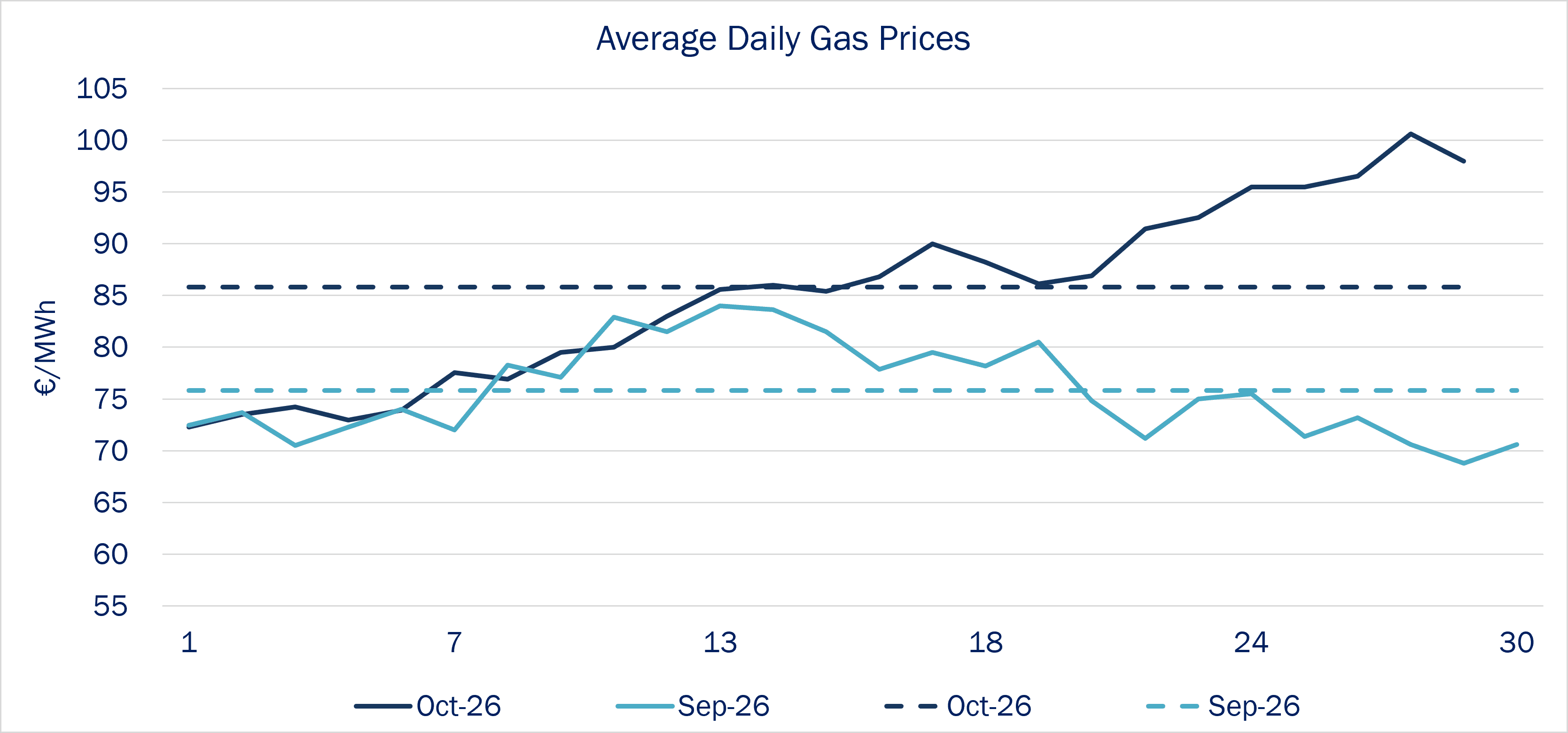
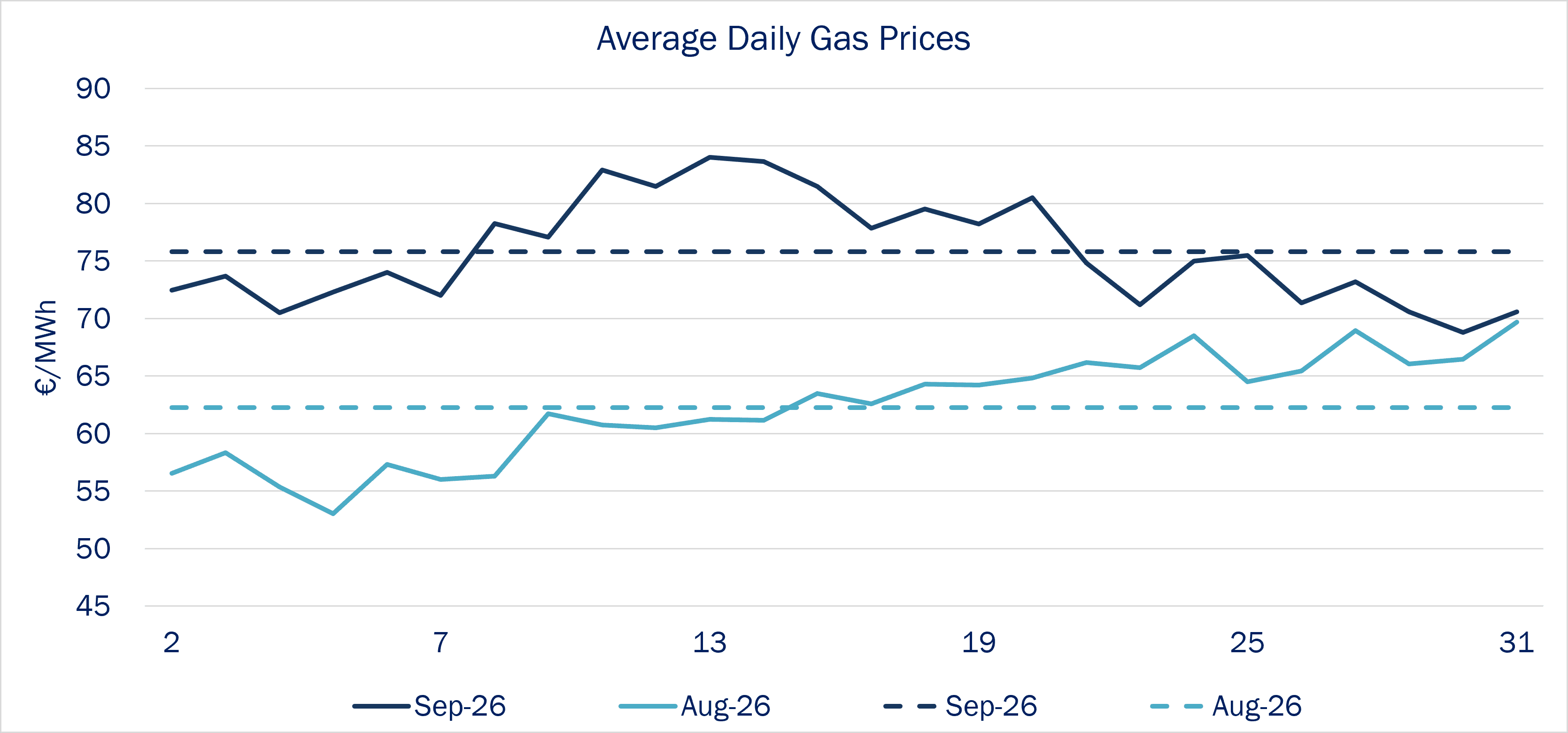
Regarding the PEG Day-Ahead spot price, October 2026 prices averaged €85.8/MWh, increasing by 13 % compared with September’s average of €75.8/ MWh, with daily prices ranging between 72.3 €/MWh and €102.1/MWh throughout the month. As shown in the graph, prices remained extremely firm throughout the month and strengthened particularly during the middle of October, when they have reached the highest price of the past year (84€/MWh) and did not decrease until the end of the month.
Source: Haya Energy Solutions
European natural gas markets remained under pressure throughout October as the combination of constrained LNG availability, Norwegian supply disruptions and gradually increasing seasonal consumption tightened the regional gas balance. At the beginning of the month, competition with Asian buyers intensified as ongoing restrictions to shipping through the Strait of Hormuz limited global LNG flexibility, forcing Europe to maintain competitive prices to secure imports and preserve storage inventories. During the first half of October, intermittent Norwegian supply outages compounded these concerns, while rising residential and commercial consumption progressively reduced the pace of European storage injections. The tightening became more pronounced around 20 October, when European storage facilities shifted into net withdrawals for the first time in the winter period. Extended maintenance at Norway’s Troll field subsequently reinforced supply-side pressure, leaving gas prices sensitive to both European weather developments and global LNG availability. The overall gas market remained structurally tight, with limited LNG flexibility and the prospect of stronger winter demand maintaining upward price risks and supporting European gas forward contracts.
EU gas stocks ended October at around 74.7% full, well below the 82.8% recorded at the same time in 2025. This persistent storage deficit, together with uncertainties around LNG and Norwegian supply, leaves PEG prices particularly sensitive to further supply disruptions, weather conditions and competition with Asia for LNG for winter. France itself was around 86.7% full at the end of the month.
Market trends and futures
Source: Haya Energy Solutions
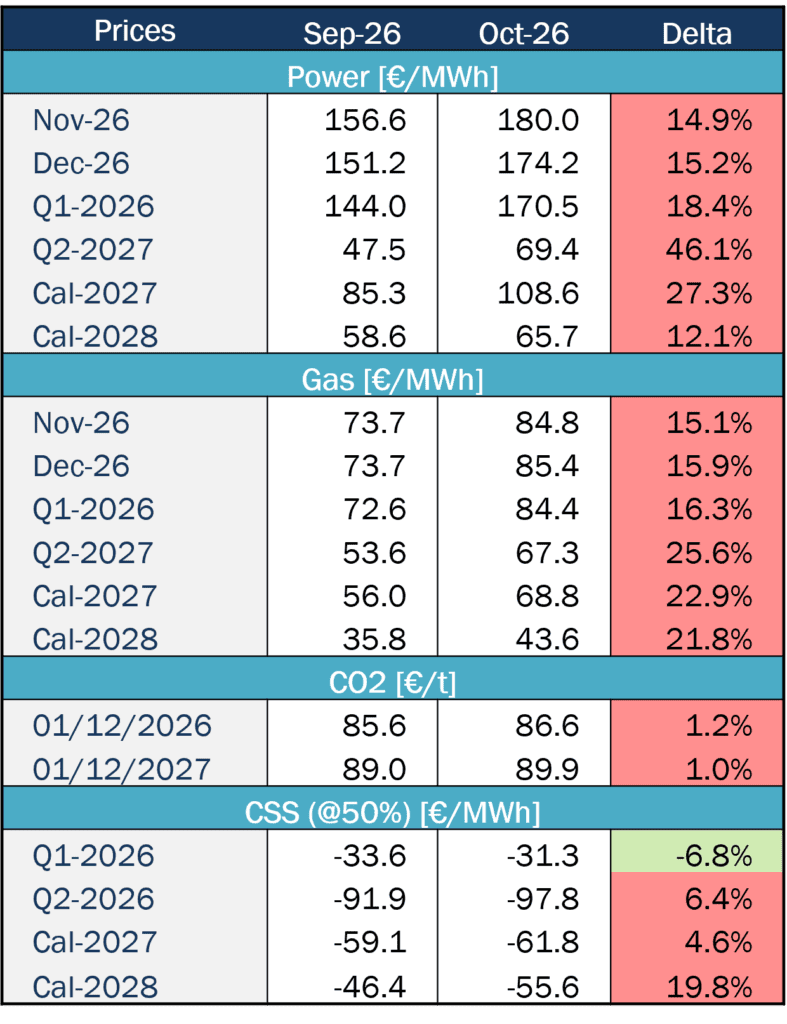
During October, French power futures moved higher across the curve, with the strongest increases concentrated in the mid-term products (Q2-27 +46%). The French Cal-27 contract exceeded €100/MWh for the first time since late 2023, with the rally extending across the forward curve rather than remaining concentrated in winter delivery periods.
Gas forwards rose across the curve, with short-term contracts increasing by around 16%. European gas markets remain exposed to low storage levels, LNG availability and geopolitical risks, all of which have increased the risk premium for winter. This gas rally fed directly into French power forwards because gas-fired generation often sets the marginal electricity price when nuclear or renewable availability is lower. In those periods, higher gas prices translate into a higher marginal power price, especially during peak-demand hours or when renewable output falls.
With winter approaching, carbon prices became increasingly sensitive to developments in European gas and power markets, as tighter energy balances raised the potential demand for emission allowances. However, this fundamentally supportive environment was partly offset by growing political uncertainty surrounding the future of the EU Emissions Trading System. Discussions over the post-2030 Linear Reduction Factor, possible delays to ETS2 implementation and adjustments to the Market Stability Reserve introduced downward pressure. The agreement to raise the Market Stability Reserve invalidation threshold from 400 Mt to 700 Mt had a limited immediate market impact, as the measure was broadly anticipated.
Oil markets remained highly volatile throughout October, with Brent prices primarily driven by developments in the Middle East and the risk of further disruptions to crude exports. The market increasingly distinguished between improving physical crude availability and the continued deterioration of regional security conditions. Although Gulf exports progressively recovered towards pre-conflict levels, elevated freight costs and persistent threats to maritime routes prevented a meaningful unwinding of the risk premium. Towards the end of October, Brent experienced some downward pressure as diplomatic signals between Washington and Tehran, alongside indications that further US military intervention could be delayed until after the November midterm elections, encouraged profit-taking. Despite this correction, Brent remained approximately 10% higher over the month, illustrating the continued dominance of geopolitical uncertainty over improving physical supply fundamentals.
Key news and implications
Italy’s gas price cap
In mid-October, the Italian government reportedly secured the European Commission’s agreement in principle for a temporary mechanism targeting to reduce the impact of gas-fired generation costs on wholesale electricity prices, against a backdrop of renewed tensions in European gas markets. The proposal would introduce a reference gas price of approximately €60/MWh for eligible gas-fired power plants. The mechanism would initially apply for 12 months, followed by a six-month phase-out period, although the final regulatory framework remains to be confirmed.
Unlike a conventional price cap, the measure would not directly limit gas prices on the Italian PSV market. Gas would continue to be traded at market prices. Instead, eligible gas-fired power plants would receive compensation for the portion of their fuel costs exceeding the €60/MWh reference threshold. This compensation would reduce their effective electricity generation costs, allowing them to submit lower offers to the wholesale electricity market.